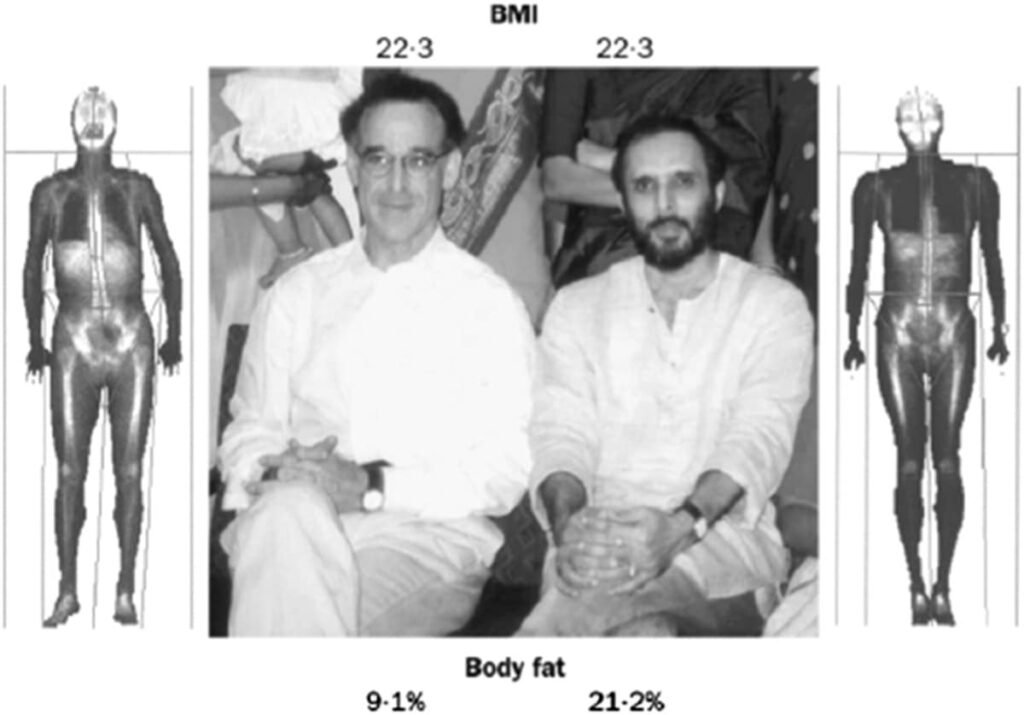
Many Indians are experiencing unexplained weight gain despite consuming fewer calories than Western diets, a phenomenon that medical experts now attribute to a complex interplay of genetics, metabolism, and lifestyle factors unique to South Asians. According to Dr. Jatin Kumar Majhi, Associate Consultant in Endocrinology at Manipal Hospital Bhubaneswar, the answer lies in what scientists call the “thin-fat phenotype,” where Indians store more fat internally even when appearing slim on the outside.
“Indians simply have a metabolism that tilts toward fat storage and away from muscle building,” Dr. Majhi explained in a recent analysis published on November 25, 2025. Research shows that South Asians tend to have higher visceral fat even at normal body weight, lower muscle mass, and greater insulin resistance compared to other populations. This visceral fat behaves like a hormonal organ, raising the risk of diabetes and metabolic syndrome even in individuals who “look thin”.
Diet and Lifestyle Factors
The typical Indian diet, which revolves around refined carbohydrates such as roti, rice, poha, idli, and chai with sugar, causes frequent insulin spikes. Insulin serves as the body’s primary fat-storing hormone, meaning even normal portions of carb-heavy foods push the body toward fat accumulation. Compounding this issue, chronic protein deficiency is widespread across India, with many people relying heavily on grains and vegetables while under-consuming protein sources like lentils, paneer, eggs, or meat. Low protein intake slows metabolism, reduces satiety, and prevents muscle repair.
The rise of ultra-processed foods in India has worsened the crisis. According to a November 2025 Lancet series, retail sales of ultra-processed foods in India jumped from $0.9 billion in 2006 to nearly $38 billion in 2019. These foods confuse hunger signals, alter gut hormones, and drastically slow metabolic rate.
Stress and Genetic Predisposition
Chronic stress plays a major role in the Indian metabolic puzzle. Elevated cortisol levels trigger carb cravings, store more fat around the abdomen, and disrupt sleep, further slowing metabolism. Modern Indian lifestyles—with long commutes, office deadlines, and social pressures—keep cortisol chronically elevated.
Studies show that Indian babies are often born with lower muscle mass due to maternal undernutrition, creating a biological foundation that makes fat gain easier and muscle gain harder throughout adulthood. Recent data from the ICMR-INDIAB study estimates that 28.6% of Indians have generalized obesity, while 39.5% have abdominal obesity. Nearly one in three Indians exhibits lipid abnormalities, a key marker of early metabolic dysfunction and insulin resistance.